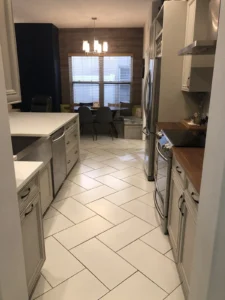
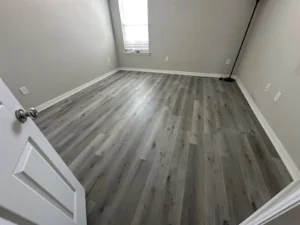
Ask ten homeowners in Melbourne, Satellite Beach or Palm Bay what floor to put in a house near the ocean, and you will get two answers: tile or luxury vinyl plank. Both can suit many coastal homes, but water resistance, wear performance and installation requirements depend on the selected product and the complete flooring system. The tile vs vinyl plank decision comes down to how the house is used, what it feels like underfoot, what you want to spend and how long you plan to stay. This guide compares them for the Space Coast, where salt air and summer humidity are part of the deal.
Tile vs vinyl plank at a glance
- Water: choose products rated for the room’s exposure. Tile showers require a properly designed waterproofing system; waterproof vinyl planks do not make the entire floor assembly waterproof.
- Sand and scratches: porcelain tile is harder; vinyl plank with a 20 mil or thicker wear layer holds up well with mats at the doors.
- Feel: tile is cool and hard; vinyl plank is warmer, softer and quieter.
- Install time: the schedule depends on square footage, removal, preparation, layout and product cure requirements. Obtain a project-specific schedule before planning move-back.
- Cost: vinyl plank is usually less, mostly because of labor.
- Lifespan: tile can last decades; good vinyl plank lasts 15 to 25 years.
- Repairs: a single vinyl plank can be swapped; a cracked tile needs a careful cut-out and a matching spare.
Why coastal Melbourne homes lean toward hard floors
Salt air carries moisture, and homes near the Indian River and the beaches run higher indoor humidity than inland Orlando. Sand comes in on everything. Many homes in Melbourne Beach and Indialantic are rentals or second homes that sit closed up for weeks. Those conditions rule out solid hardwood and most laminates and leave the two waterproof choices. The National Weather Service office in Melbourne publishes local climate data that shows how long the humid season runs here; you can browse it at weather.gov/mlb/climate.
Tile vs vinyl plank: durability near the beach
To start with durability, porcelain tile is the hardest floor you can buy for a home. It resists scratching from everyday sand and grit far better than most floors, though no surface is scratch-proof, and polished or glazed finishes can show wear over time. Sunscreen wipes off and a wet dog does nothing to it. The weak point is grout, which can stain (whether it needs sealing depends on the grout product; some high-performance grouts, such as MAPEI Ultracolor Plus FA, do not require a sealer), and the fact that a dropped cast-iron pan can crack a tile. Rigid-core vinyl plank resists dents and spills, and its texture hides fine scratches, but a heavy grit of sand ground in under a chair leg will eventually dull the finish. In the tile vs vinyl plank question for a beach rental with constant turnover, tile is the lower-maintenance floor over ten years. On the other hand, in a family home where people take their shoes off, vinyl plank holds up well.
Tile vs vinyl plank: comfort and noise
This is where vinyl plank wins the tile vs vinyl plank debate for most owners. Tile is cold in January, even in Melbourne. It is also hard on knees and dropped glasses. Vinyl plank with an attached pad, by contrast, is warmer, quieter and more forgiving. In a two-story home or a condo, sound rules matter for both floors. Approval depends on the tested floor/ceiling assembly (the flooring, the underlayment or sound membrane, and the structure below) and on your association’s requirements, not simply on vinyl versus tile. Check your condo documents and ask for the product’s tested sound ratings before you choose.
Tile vs vinyl plank: cost and install time
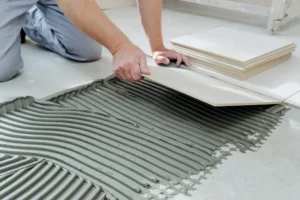
Installation labor is a major difference between tile and vinyl plank. Tile requires setting, grouting and product-specific cure time. Vinyl plank may use a floating or glue-down installation method. The total schedule for either floor depends on project size, removal, preparation, layout and site conditions. Tile usually costs more per square foot installed, and the gap widens with large-format tile. Our tile installation cost guide breaks down what drives tile pricing.
Where each one belongs in a Melbourne home
Room by room, here is how we usually advise Brevard homeowners who are weighing the two.
- Bathrooms, laundry, lanai and pool entries: tile. Standing water and chlorine are what it is made for. See our tile flooring installation page.
- Kitchen: either. Tile for a rental; vinyl plank if you cook a lot and value comfort.
- Living, dining and bedrooms: vinyl plank, or wood-look plank tile if you want one surface through the whole house.
- Beach rentals with weekly turnover: tile in the main areas, vinyl plank in bedrooms.
In practice, the tile vs vinyl plank answer in many Space Coast homes is both: tile in the wet rooms and vinyl plank everywhere else, with a flush transition between them.
Tile vs vinyl plank, the hybrid: wood-look plank tile
If you like the look of vinyl plank but want the hardness of tile, porcelain plank tile in 6 by 36 or 8 by 48 gives a wood-grain floor that never minds water or sand. It costs more to install than vinyl, because it is still tile. Likewise, it feels like tile underfoot. For a beachside home with heavy traffic it is a strong middle path. Our porcelain vs ceramic tile guide explains why porcelain is the right body for floors.
Frequently Asked Questions
Is tile or vinyl plank better for a beach house in Melbourne, FL?
Tile for wet rooms, rentals and the hardest wear; vinyl plank for comfort, noise and faster, cheaper installation. Many homes use both.
Does salt air damage vinyl plank flooring?
No. Vinyl plank is not affected by salt or humidity. Metal transition strips can corrode near the coast, so we use aluminum or vinyl trims.
Which is cheaper to install, tile or vinyl plank?
Vinyl plank, in almost every case, because it needs far less labor.
Can vinyl plank go over existing tile?
It can, provided the old tile is flat and firmly bonded. We fill wide grout lines and check door heights. It is a common way to update a 1990s Brevard home quickly.
Which lasts longer?
Porcelain tile can last the life of the house. Quality rigid-core vinyl plank typically lasts 15 to 25 years, and single planks can be replaced.
Still deciding? Let us look at the house
We install both floors, and we will tell you honestly which one fits each room. Orlando Flooring Gurus is family-owned and gives free estimates. Serving the greater Orlando area and nearby Central Florida communities; availability depends on project location. Call (321) 333-5451 or book a free estimate for your Melbourne home.