Oceanfront living comes with a short list of enemies for any floor. First, sand comes in from the beach. Second, salt air never fully dries. Third, humidity creeps in through the sliders. A downstairs neighbor can hear every footstep. Daytona Beach condo flooring has to deal with all four, and it has to pass the association’s rules before the first box is opened. This guide covers what works in beachside buildings from Ormond Beach to Daytona Beach Shores and Ponce Inlet, and how to get an install approved and done without drama.
What the beach does to Daytona Beach condo flooring
To begin with, sand is an abrasive. Every grain that comes in on a flip-flop grinds against the finish. That is why soft woods and low-grade laminates dull quickly in beach units. Salt air carries moisture and corrodes metal fasteners and transition strips. Humidity swings too, for example when a unit sits empty with the AC turned up for months and then fills with guests in July. On top of that, most oceanfront towers are concrete slab construction, so any floor goes directly over concrete that can carry moisture of its own.
The Daytona Beach condo flooring options that handle this best are porcelain tile and rigid-core luxury vinyl plank. Both are waterproof, both shrug off sand and both work over concrete. Carpet, by contrast, survives only in bedrooms, and solid hardwood should stay on the mainland.
Daytona Beach condo flooring rules: sound, approval and insurance
Almost every condo association in Florida regulates hard-surface flooring in units above the ground floor. The usual requirement is an acoustic underlayment with a minimum IIC (impact insulation class) rating, often 50 or higher. Written board approval is needed before work starts. Some buildings also limit work hours and require a licensed, insured contractor. Florida’s Condominium Act, Chapter 718 of the Florida Statutes, gives associations the authority to adopt these rules, so the board’s answer is final.
Before you shop for flooring, ask the property manager for three things: the flooring section of the rules, the required IIC or STC rating, and the approval form. We supply the product spec sheets and insurance certificate the board usually asks for.
Best Daytona Beach condo flooring options
Rigid-core vinyl plank with acoustic pad
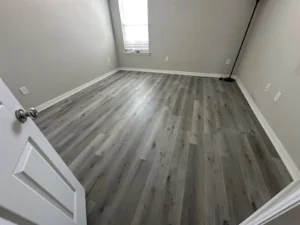
SPC vinyl plank is the most common Daytona Beach condo flooring choice in the units we work on along A1A. It is light, which matters when material rides a service elevator. The flooring, underlayment and floor/ceiling structure must be evaluated as a tested assembly against the association’s requirements. Any added underlayment must also be allowed by the flooring manufacturer. Obtain written association approval before work begins. For rental units, choose a 20 mil wear layer or better. Our vinyl plank flooring installation page explains the floating and glue-down methods.
Porcelain tile over a sound mat
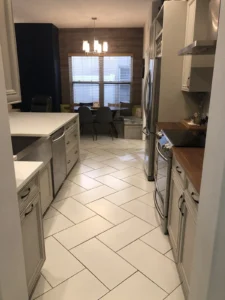
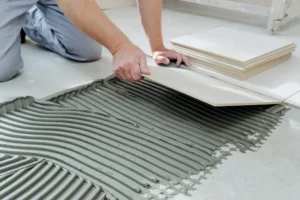
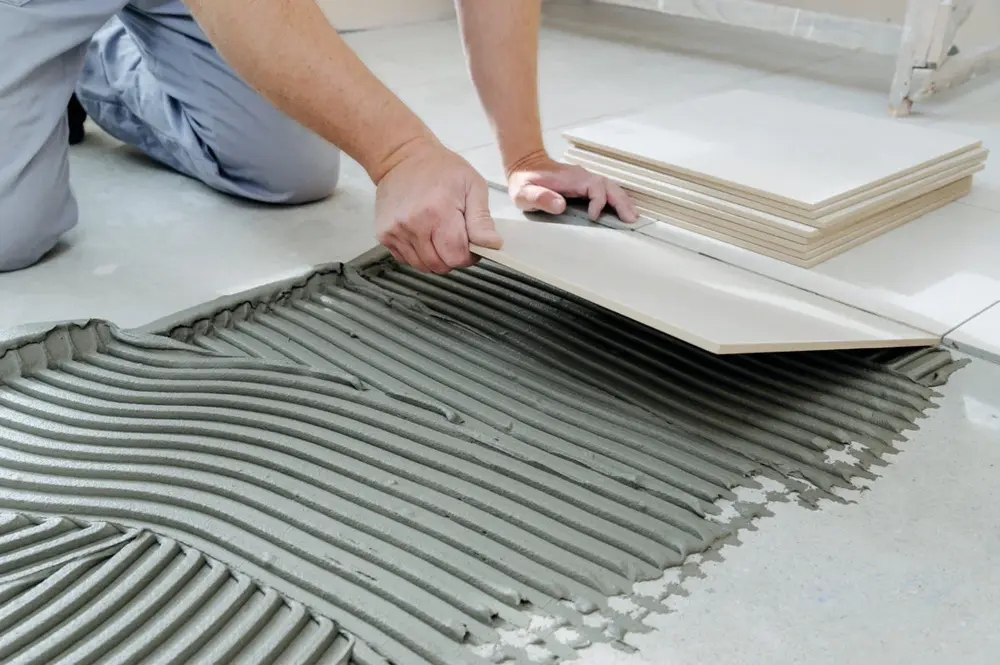
Tile, on the other hand, is the longest-lasting option and the easiest to clean of sand and sunscreen. An upper-floor tile installation may require sound control, crack isolation or other system components. The building requirements, substrate and selected installation system determine the scope, cost and schedule. Large-format porcelain or wood-look plank tile both suit coastal interiors.
Carpet in bedrooms only
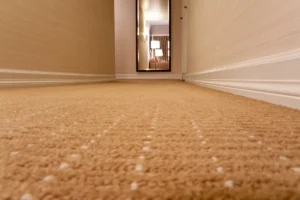
Carpet quiets a bedroom and needs no acoustic approval. That is why many owners keep it there. For a vacation rental, choose solution-dyed nylon that tolerates sand and frequent cleaning.
What to avoid
Standard laminate swells at the edges when sand and moisture get into the joints. Solid hardwood moves too much with coastal humidity. Likewise, thin peel-and-stick vinyl lifts when the AC cycles.
Daytona Beach condo flooring in a high-rise: logistics that change the price
- Elevator reservations and protection. Most buildings require a scheduled service elevator and padded walls. Build it into the timeline.
- Parking and staging. Material often has to be carried from a garage or street parking, which adds labor.
- Debris removal. Old tile cannot go down the trash chute. Haul-off is bagged and carried out.
- Work hours. Many associations allow work only on weekdays between about 8 a.m. and 5 p.m., so a one-day job on the ground can become two days on the eighth floor.
- Noise during demo. Chipping out tile echoes through concrete. Neighbors appreciate a heads-up note.
Renting your unit? Floors that turn over fast
Daytona Beach fills for Bike Week, Speedweeks, spring break and summer, and many owners rent their units in between. Hard floors with a quick mop are the practical Daytona Beach condo flooring pick for rentals, and a single damaged vinyl plank can be swapped without redoing the room. Our rental property flooring guide covers durability and cost per year in more detail, and our Florida humidity guide explains why waterproof products matter so much on the coast.
What Daytona Beach condo flooring costs
In general, expect the material cost of a house job plus the condo extras: acoustic underlayment, elevator time, carry-in and bagged debris removal. We measure the unit, review the association’s rules and give a free written estimate that lists the condo-specific items separately.
Frequently Asked Questions
What is the best flooring for an oceanfront condo in Daytona Beach?
Rigid-core vinyl plank over an acoustic underlayment, or porcelain tile over a sound and crack-isolation membrane. Both are waterproof, handle sand and work over concrete.
Do I need HOA approval to change condo flooring?
In nearly all Florida condos above the ground floor, yes. Expect a minimum IIC sound rating for the underlayment and a written approval before work begins.
Can I install hardwood in a beach condo?
Engineered hardwood is possible with board approval and a sound mat, but salt air, sand and humidity make it a high-maintenance choice. Most owners choose wood-look vinyl or plank tile instead.
How long does a condo flooring install take?
A typical two-bedroom unit with vinyl plank takes two to three days, allowing for elevator scheduling and work-hour limits. Tile takes about a week with curing.
Will sand scratch vinyl plank?
Sand will dull any floor over time, but a 20 mil or thicker wear layer on vinyl plank resists it well. A mat at the entry and regular sweeping make the biggest difference.
Get a free estimate for your Daytona Beach condo
Send us the unit’s square footage and the association’s written flooring requirements. We will review suitable options and supporting product information; final approval remains with the association. Orlando Flooring Gurus is a family-owned installer. Serving the greater Orlando area and nearby Central Florida communities; availability depends on project location. Call (321) 333-5451 or request a free estimate online.